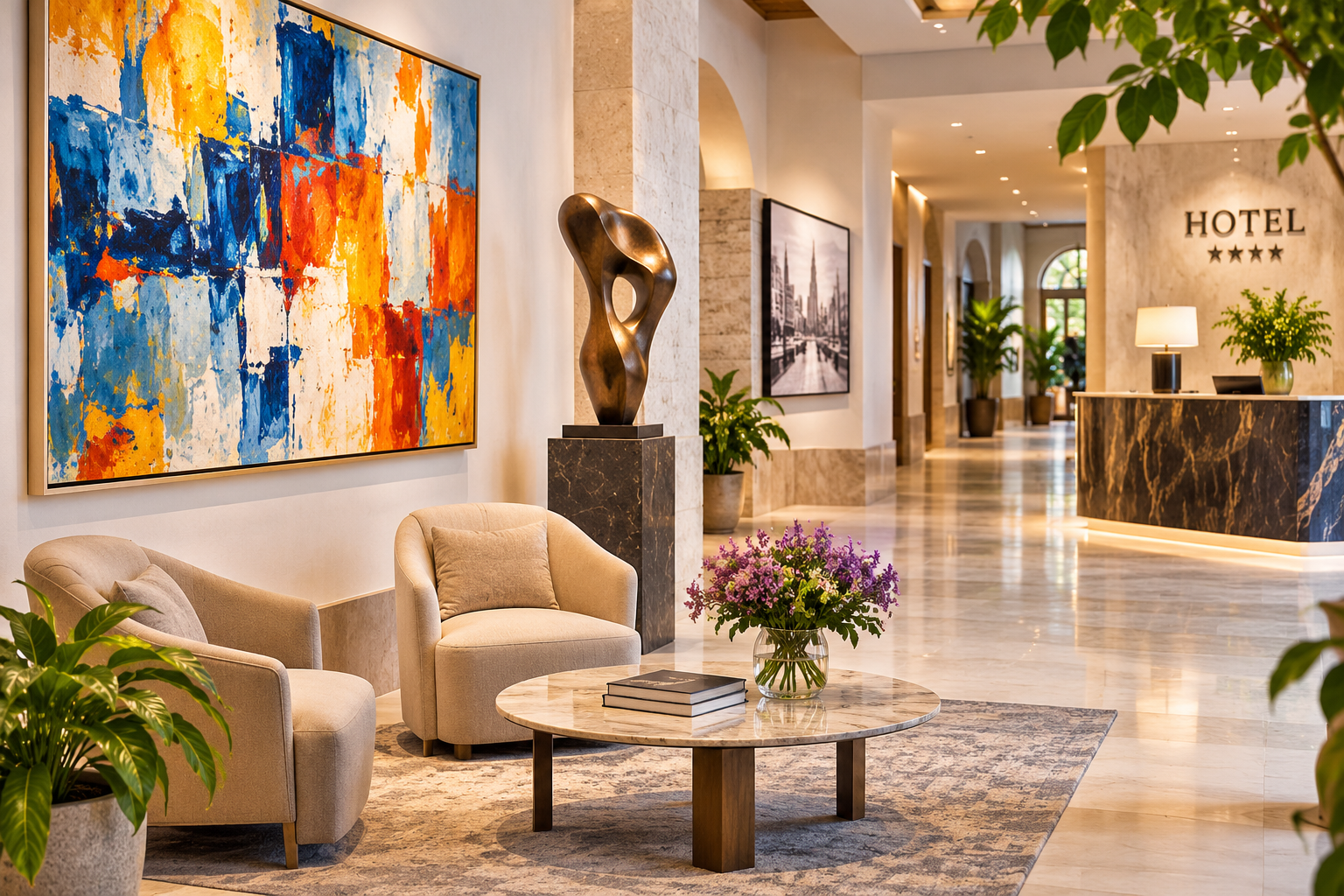
Art in Hotels: How to Select Artwork to Create Unique Spaces
Art can give a hotel personality, transform its interiors and create a deeper connection with its surroundings. Discover how a carefully planned artistic selection can turn ordinary spaces into memorable environments for guests.
A hotel is much more than a place to sleep. Its architecture, interior design, atmosphere and decorative details all contribute to the experience visitors remember after their stay. Among these elements, artworks play a particularly interesting role: they communicate ideas, evoke emotions and give character to spaces that might otherwise feel impersonal.
Art selection in hotels involves choosing and arranging artworks in a way that reinforces the identity, design concept and atmosphere of each establishment. It is not simply about selecting paintings that match the furniture, but about creating a visual collection that tells a story and establishes a relationship with guests.
From independent boutique hotels to large luxury resorts, a carefully selected art collection can become an important part of the overall hospitality experience.
What Does Art Curation in a Hotel Mean?
Art curation is the process of selecting, organising and presenting artworks according to a particular concept or purpose. In a hotel environment, it involves creating a visual collection that complements the architecture, interior design and personality of the establishment.
This process can include paintings, photography, sculptures, illustrations, installations, textile works and other artistic expressions. Each piece should contribute to the atmosphere of its location rather than functioning merely as an isolated decorative object.
For example, a hotel inspired by Mediterranean culture might incorporate works related to coastal landscapes, local traditions, architecture or contemporary interpretations of the region. An urban design hotel could take a different approach, using photography, abstract painting and experimental installations to communicate the energy of its city.
The objective is to achieve visual coherence without requiring every artwork to share exactly the same style.
Why Art Matters in Hotel Design
Art influences the way people perceive an interior. It can change the atmosphere of a room, introduce visual interest and make a place feel more personal. In hospitality, these qualities help distinguish one establishment from another.
Creating a distinctive identity
A carefully selected collection gives a hotel a recognisable visual language. Artwork can reinforce its design concept and communicate whether the establishment is contemporary, traditional, artistic, minimalist or closely connected to local culture.
Enhancing the guest experience
Interesting artworks can create small moments of discovery during a stay. Visitors might encounter a painting in the lobby, a sculpture in a corridor or a carefully chosen photograph in their room.
Connecting with local culture
Art allows visitors to discover the history, landscapes, traditions and creative identity of their destination. This connection helps the hotel feel more integrated into its surroundings.
Adding personality to interiors
Artworks can soften architectural lines, create focal points and introduce colour, texture and contrast. They help transform functional interiors into spaces with greater visual depth.
How to Choose the Right Artwork for a Hotel
Selecting artworks for a hotel requires more than personal taste. Each piece should respond to the character of the building, the expectations of its guests and the atmosphere the establishment wants to create.
Start with the hotel’s identity
Before choosing individual works, it is useful to define the hotel’s visual concept. Is it a contemporary urban property, a historic building, a countryside retreat or a coastal resort? Understanding its identity provides a foundation for consistent artistic decisions.
Consider the architecture and interior design
The proportions, materials, lighting and colour palette of each space should influence the selection. A large abstract painting may work well in a spacious lobby, while a smaller photographic composition might be more suitable for a guest room or intimate lounge.
Think about the guest profile
The type of visitor a hotel attracts can also guide its artistic approach. A business hotel, a family resort and an independent boutique property may require different choices in terms of atmosphere, subject matter and presentation.
Look for visual balance
A successful collection does not need to follow the same style throughout the building. Different techniques and formats can coexist as long as there is a relationship between them. Repeated colours, materials, themes or artistic references can help create continuity.
Consider practical requirements
Hotels are busy environments, so artworks must be suitable for their locations. Lighting, humidity, direct sunlight, cleaning procedures, security and installation methods should all be considered, particularly when displaying original or valuable pieces.
Different Types of Art for Hotel Interiors
There is no single artistic style that suits every hotel. The most interesting collections often combine different disciplines and formats, creating a varied visual experience throughout the establishment.
Contemporary painting
Contemporary painting can introduce colour, movement and individuality. Abstract compositions, figurative works and experimental techniques offer different ways to express a hotel’s character.
Artistic photography
Photography is particularly effective at establishing connections with places and people. Architectural images, portraits, landscapes and documentary projects can offer guests a different perspective on their destination.
Sculpture and three-dimensional works
Sculptures can become focal points in entrance halls, gardens, courtyards and shared areas. Their relationship with light, space and movement makes them especially interesting in larger interiors.
Local crafts and traditional techniques
Ceramics, textiles, woodwork and other traditional crafts can introduce regional identity into hotel design. They also offer opportunities to showcase local creators and preserve artistic traditions.
Digital and interactive art
Digital installations and interactive projects offer new ways to incorporate creativity into contemporary hospitality spaces. Screens, projections and motion-responsive installations can create changing visual experiences, particularly in public areas.
The Importance of Local Artists and Cultural Identity
One of the most interesting ways for a hotel to establish a relationship with its destination is to include works by artists connected to the local area. Their perspectives can introduce visitors to the region in a way that goes beyond conventional tourist information.
Local creators often explore subjects that reflect the character of their surroundings, including landscapes, architecture, everyday life, historical references and contemporary social themes. Their work can give hotel interiors a more authentic connection with the place where the establishment is located.
In cities with a strong artistic tradition, this approach offers particularly interesting possibilities. Valencia, for example, has a rich cultural environment that combines historical heritage, modern architecture, contemporary galleries and an active creative scene.
Hotels wishing to understand this artistic context can explore art and cultural heritage in Valencia as a starting point for discovering the city’s visual identity and creative environment.
Collaborating with local creators can also help hotels establish relationships with galleries, cultural organisations and independent artistic initiatives. These connections may lead to exhibitions, temporary installations or joint projects that add value to the guest experience.
Where Should Artwork Be Displayed in a Hotel?
Different areas of a hotel offer different opportunities for artistic expression. The placement of each work should take into account how visitors use the space and how much time they usually spend there.
Reception and lobby: These areas create the first impression. A striking painting, sculpture or installation can establish the hotel’s artistic identity as soon as guests arrive.
Guest rooms: Artwork in private spaces helps create a more intimate atmosphere. Photography, illustrations and smaller paintings are common choices.
Restaurants and bars: These spaces offer opportunities to use art to reinforce the atmosphere of the dining experience, whether relaxed, elegant or contemporary.
Corridors and circulation areas: A sequence of artworks can transform transitional spaces into small exhibition routes that encourage guests to explore the building.
Gardens and outdoor areas: Sculptures and installations designed for outdoor conditions can establish a dialogue between art, architecture and landscape.
Meeting and event spaces: Carefully selected artworks can make professional environments feel more welcoming while maintaining their functional character.
How to Build an Art Collection for a Hotel
A hotel does not need to acquire a complete art collection in a single project. In many cases, developing an artistic proposal gradually makes it possible to create a more coherent and carefully considered selection.
The first step is to establish an artistic direction and identify the spaces where artworks can have the greatest impact. From there, the hotel can set priorities for purchases, commissions or collaborations according to its budget and long-term objectives.
Some establishments choose to purchase original works, while others collaborate with galleries, artists or art consultants to organise temporary exhibitions and rotating collections. Each approach offers different possibilities in terms of flexibility, investment and maintenance.
It is also important to document the collection. Keeping records of artists, titles, materials, installation dates and conservation requirements makes it easier to manage the artworks and plan future changes.
Over time, the collection can become an important part of the hotel’s identity, reflecting its evolution and its relationship with the surrounding cultural environment.
Art as Part of a Memorable Guest Experience
Guests do not experience a hotel only through its rooms and services. They also remember the atmosphere, the details and the unexpected moments that make an establishment feel different.
Art can contribute to these memories by creating points of interest throughout the building. A sculpture in a courtyard, a photographic series along a corridor or a painting reflecting the nearby landscape can encourage visitors to pause and observe their surroundings.
Some hotels take this idea further by providing information about the artists and the stories behind selected works. Small labels, printed guides or digital resources can help guests understand the collection and discover aspects of local culture.
In this way, art becomes more than a decorative feature. It can act as a bridge between the hotel, its visitors and the destination itself.
Conclusion: Creating Hotels with an Artistic Identity
Art curation gives hotels an opportunity to create interiors that communicate personality, connect with local culture and provide guests with a richer visual experience. The most successful collections are not necessarily the largest or most expensive, but those that respond thoughtfully to the character of the establishment.
By selecting appropriate artworks, collaborating with artists and considering the relationship between design and destination, hotels can develop distinctive and memorable spaces. Art becomes part of the hospitality experience, adding meaning to the places where people stay.
Frequently Asked Questions About Art in Hotels
What is art curation in hotels?
It is the process of selecting, organising and displaying artworks throughout a hotel according to its identity, interior design and the experience it wants to offer guests.
Why do hotels display original artworks?
Original artworks can give interiors a distinctive character, reinforce the establishment’s identity and offer guests opportunities to connect with artistic expression and local culture.
What type of art is suitable for a hotel?
Painting, photography, sculpture, ceramics, textiles and digital installations can all be suitable options. The choice depends on the hotel’s design, location, audience and practical requirements.
Should hotels collaborate with local artists?
Working with local artists can help hotels connect with their destination, support the creative community and introduce guests to the cultural identity of the surrounding area.
Where can artwork be displayed in a hotel?
Artworks can be installed in lobbies, guest rooms, restaurants, corridors, gardens and meeting spaces. Each location should be assessed according to its function, lighting and environmental conditions.
How can a hotel create its own art collection?
A hotel can begin by defining an artistic concept, identifying suitable spaces and selecting works that reflect its identity. The collection can then grow through purchases, commissions and collaborations with artists or galleries.