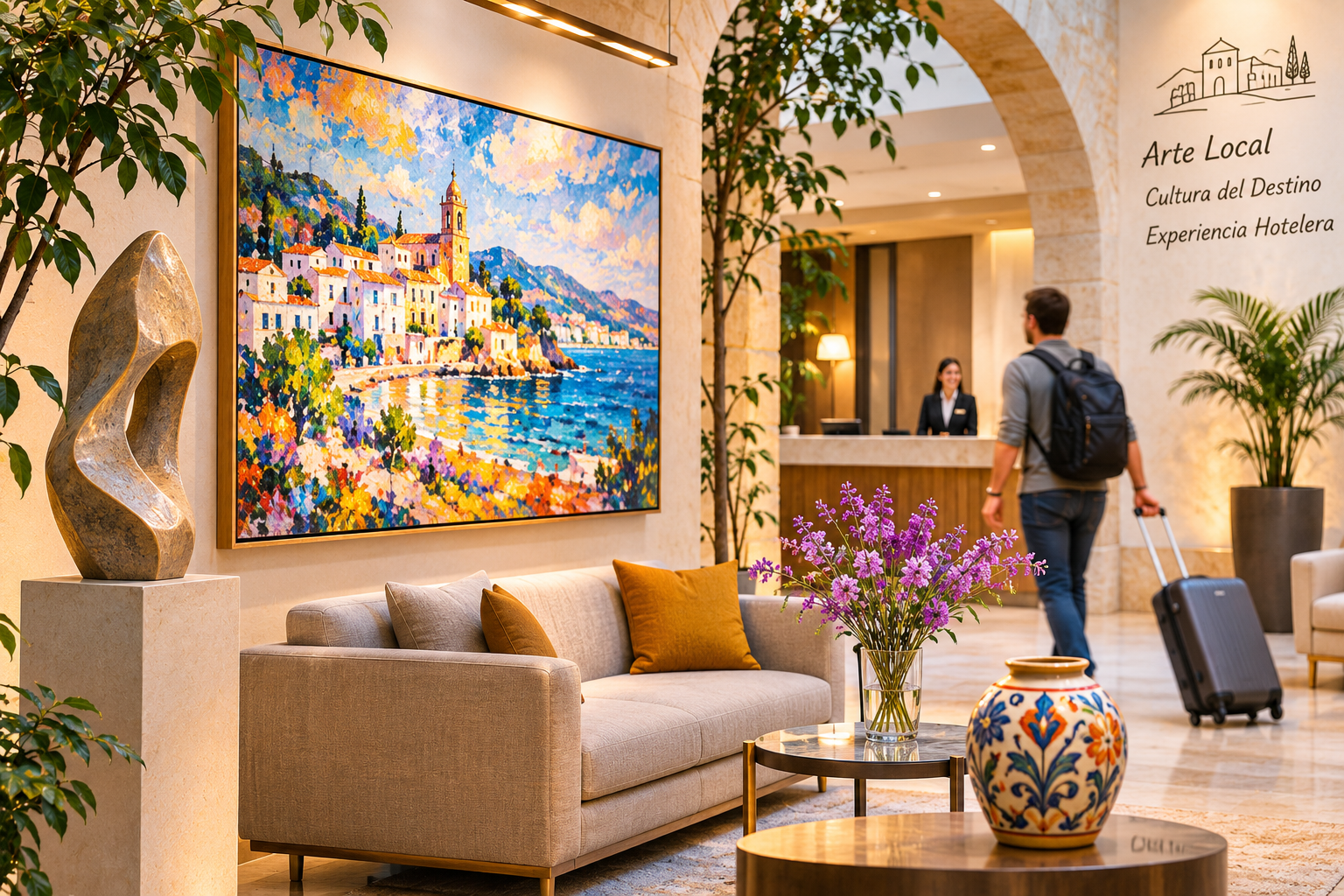
Local Art in Hotels: Connecting Guests with the Culture of the Destination
Works by local artists can transform a hotel into a place with its own identity and an authentic connection to its surroundings.
A hotel is much more than a place to sleep. It can also offer guests their first introduction to the history, traditions and artistic character of a destination. Interior design, architecture and, above all, the artworks displayed throughout the property help communicate a personality that visitors may remember long after their stay.
In this context, incorporating local art in hotels is an effective way to enrich the guest experience and establish a connection between the property and the cultural community around it. Paintings, photographs, sculptures and handcrafted pieces can tell stories that generic decoration rarely manages to convey.
Art as an Expression of the Destination’s Identity
Every city and region has its own cultural personality. Its landscapes, historic buildings, traditions, events and ways of life provide a rich source of inspiration for artists and creative professionals.
A hotel that incorporates these references into its interior design can offer an experience that feels more connected to its location. For example, a property in a Mediterranean city might display photographs of local architecture, paintings inspired by the sea or artworks reflecting the colours and distinctive light of the region.
The key is to select pieces that have a genuine relationship with the surroundings. The aim is not simply to display recognisable images of the destination, but to create a coherent visual narrative that allows guests to discover its character from a different perspective.
The Benefits of Featuring Local Artists in Hotels
Working with local creators brings advantages to both the hotel and the cultural community in which it operates.
1. A Distinctive Identity
Original artworks help hotels avoid impersonal and repetitive interiors. A carefully curated art collection can become one of the features that distinguishes a property from other hotels with similar characteristics.
2. Supporting the Creative Community
Featuring local artists, photographers, sculptors and craftspeople helps establish professional relationships with the surrounding community. In addition to giving their work greater visibility, hotels can contribute to creating opportunities for the cultural sector.
3. A More Authentic Guest Experience
Artworks can spark curiosity and encourage visitors to learn more about the destination. A short explanation about the artist, technique or story behind a piece can add another dimension to the guest experience.
4. Consistency with the Hotel’s Identity
Art can reinforce a hotel’s overall concept. A historic property, a contemporary design hotel or a small boutique establishment can each use different artistic approaches to express its personality while maintaining a consistent visual identity.
Types of Local Art That Hotels Can Incorporate
There is no single formula for integrating art into a hotel. The selection depends on the property’s size, architectural style, target audience and relationship with its surroundings.
- Contemporary painting: Works by emerging or established artists that bring colour, character and a personal interpretation of the region.
- Art photography: Images documenting local landscapes, architecture, heritage and everyday life.
- Sculpture: Pieces that add volume and visual presence to lobbies, gardens, courtyards and communal areas.
- Traditional crafts: Ceramics, textiles, decorative objects and other creations connected to local craftsmanship.
- Digital art: Audiovisual projects and contemporary installations that bring together tradition and new technologies.
The variety of artistic formats makes it possible to adapt a project to the characteristics of each space. What matters is that every piece serves an aesthetic and cultural purpose rather than functioning as an isolated decorative element.
How to Choose the Right Artworks
Introducing local art into a hotel requires careful planning. A successful selection should consider both artistic qualities and the practical needs of the property.
Define an Artistic Concept
Before purchasing or displaying artworks, it is worth deciding what story the hotel wants to tell. The concept might focus on regional traditions, contemporary culture or a combination of different cultural expressions.
Explore the Local Art Scene
Art galleries, cultural associations, artists’ studios and exhibition spaces are excellent starting points for discovering creators and interesting projects. This research also helps identify proposals that fit the hotel’s identity.
Consider the Characteristics of Each Space
Lighting, dimensions, materials and visitor traffic all influence the selection. A large-scale artwork might work perfectly in a spacious lobby, while a delicate piece may require a more protected location.
Pay Attention to Presentation and Information
Identifying the artist and providing a short explanation of the work helps guests understand what they are seeing. Small information plaques, QR codes or an art guide available at reception can make this information easily accessible.
The Role of Art Galleries and Cultural Spaces
Art galleries and cultural venues can become valuable partners for hotels looking to develop a strong artistic programme. Their knowledge of artists, trends and the art market makes it easier to select works and establish lasting professional relationships.
Hotels can also organise temporary exhibitions, artist presentations and small cultural events within their own premises. In this way, the property becomes more than a place where artworks are displayed: it becomes a meeting point for visitors, artists and the local community.
For hotels looking to explore different artistic approaches and discover works that can inspire interior design and decoration projects, it is worth exploring this art gallery and its creative proposals.
Temporary Exhibitions: A Way to Refresh the Guest Experience
A permanent collection provides continuity and identity, but temporary exhibitions introduce new perspectives and keep the hotel’s spaces visually engaging.
A property might dedicate an area of its communal spaces to showcasing a different artist’s work every few months. It could also organise themed exhibitions connected to cultural events, local celebrations or tourist seasons.
These initiatives create opportunities for collaboration and give guests additional reasons to explore the hotel. They also allow the property to experiment with different artistic approaches before deciding whether any particular work or collection should become a permanent feature.
Local Art and Cultural Tourism: A Natural Connection
Cultural tourism goes beyond visiting museums and monuments. It also involves discovering the creative expressions that form part of everyday life in a destination.
When a hotel features works by local artists, it can complement the visitor experience and encourage guests to explore other cultural spaces in the area. A photograph might inspire someone to visit a historic neighbourhood; a handcrafted object could lead them to discover a local workshop; a painting might encourage a visit to an art gallery.
In this way, the hotel helps connect different experiences and strengthens its relationship with the destination. Art becomes a language that brings visitors closer to local culture in an accessible and memorable way.
Frequently Asked Questions About Local Art in Hotels
Why is it worth incorporating local art into a hotel?
Because it helps strengthen the property’s identity, supports local creators and offers guests an experience that is more closely connected to the culture of the destination.
What types of artworks can be displayed in hotels?
Hotels can feature paintings, photography, sculptures, ceramics, crafts, installations and digital art, depending on the characteristics of each space.
How can hotels collaborate with local artists?
They can purchase or rent artworks, organise temporary exhibitions, commission specific projects or establish partnerships with galleries and cultural associations.
Does a hotel need a large art collection?
No. A small selection of carefully chosen and strategically positioned artworks can communicate a much clearer cultural identity than an abundance of decorative pieces without a defined concept.
Conclusion: Hotels with Their Own Cultural Identity
Integrating local art into a hotel is an opportunity to create distinctive spaces, build relationships with the creative community and offer visitors an experience that goes beyond accommodation.
Choosing the right artists, ensuring that the artworks work together and presenting them thoughtfully are essential to achieving this goal. There is no need to turn every corner into an exhibition. The objective is to find the right balance between design, culture and hospitality.
When art becomes part of a hotel’s identity, its spaces can serve as a window into the culture of the destination. And that connection is precisely what can make a stay different and memorable.