🧱 Architecture with Artistic Intention
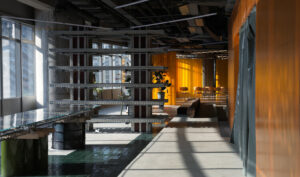
The most innovative hotels incorporate artistic elements from the architectural design phase: sculptural shapes, façades with strong visual identity, natural light play that creates sensory effects, or structures that are, in themselves, works of art.
Example:
An atrium with a suspended spiral staircase can serve as the hotel’s centerpiece, becoming a visual icon and even a meeting point.
🖼️ Art as Part of the Spatial Language
Instead of adding artworks after construction, many hotels work with artists and designers from the early stages so that art dialogues with materials, spatial layout, and the user experience.
Key strategies:
-
Noble and local materials: allow the art to merge with the surroundings.
-
Collaboration between architects and artists: ensures narrative and aesthetic coherence.
-
Strategic placement of artworks: in hallways, entrances, or waiting areas that invite pause and observation.
🎨 Artfully Curated Interiors
Every corner of the hotel can be designed as a living gallery. This requires visual curation that considers color, texture, style, and harmony with furniture and lighting.
Key elements:
-
Murals integrated into wall panels or coverings.
-
Hanging installations in high-ceiling areas (like lobbies).
-
Furniture design as functional art.
Result:
A coherent aesthetic experience where every room or common area seems to tell its own visual story.
💡 Lighting That Enhances the Art
Light is essential for art appreciation. Designing lighting to highlight the textures, volumes, and colors of each piece completely transforms its impact.
Recommendations:
-
Warm indirect lighting for delicate works.
-
Spotlights for three-dimensional pieces or sculptures.
-
Controlled natural lighting with architectural filters.
🛋️ Living Art: Integrated into Interior Design
Art can also live in everyday objects: hand-painted headboards, wallpaper designed by illustrators, or flooring with patterns inspired by artistic movements like Art Deco or Japanese minimalism.
Benefit:
It turns the environment into an immersive experience where the guest doesn’t just look at art but lives surrounded by it in every gesture—opening a door, leaning on a table, sitting in a chair.
🌐 Technology and Integrated Digital Art
Cutting-edge hotels are incorporating artistic screens, AI-generated works, interactive projections, or augmented reality into their structural design.
Competitive advantage:
It modernizes the guest experience and allows content to be updated without architectural changes. It can also be integrated into receptions, elevators, or long hallways to add dynamism.
🌿 Art and Sustainability: Conscious Design
Now more than ever, art, design, and sustainability go hand in hand. Using artworks made from recycled materials, low-impact techniques, or collaborations with local artists is part of an aesthetic ethic that many travelers appreciate.
Positive impact:
-
Strengthens the hotel’s ecological narrative.
-
Offers an authentic and meaningful experience.
-
Connects with the conscious and culturally sensitive traveler.
Integrating art into hotel architecture and design is much more than beautifying spaces: it’s about creating atmosphere, emotion, and identity. Art transforms the place into a unique and unrepeatable experience, capable of awakening the guest’s sensitivity, generating symbolic value, and distinguishing the hotel from the competition.
A hotel with art is not just visited. It is remembered.
It is felt. It is lived.